Out of the thousands of people around the world that I’ve met during my years on the psychonaut circuit and more recently in the orbit of the increasingly formalized ‘psychedelic industry’, Rev Hooman manages to stand out for several reasons. First off, he’s an idea guy who actually executes efficiently and rapidly, going from idea to prototype to finished product in about the time it takes most people to get off the drawing board. That’s pretty rare to be honest. I’ve personally spent time with him in multiple cities over multiple years, and have seen him ride boom and bust cycles, have one of his products profiled in Rolling Stone without him even knowing about it, and continue to iterate and expand his portfolio of offerings across multiple value chains tied to the psychedelic space.
As the functional mushroom and psychedelic industries expand into consumer products, AI-powered services, genetic testing, and new approaches to harm reduction, Rev is on the cutting edge of each. But as commercialization accelerates, fundamental questions remain: How do people know what they're taking? Who supports them when they’re out of their depth? And what responsibilities do businesses have beyond selling a product?
In a recent episode of the Mycopreneur Podcast, I sat down with Rev Hooman to explore these questions. Their wide-ranging conversation covered everything from synthetic tryptamines and Amanita muscaria to AI chatbots, laboratory testing, and the challenges of building businesses in a legally uncertain marketplace.

Here are 10 key educational takeaways from the conversation.
1. Psychedelic preparation and integration are critical gaps in the market
Hooman founded the Entheology Project, a religious nonprofit focused on psychedelic preparation and education, after experiencing firsthand how difficult an unexpected psychedelic experience can be to navigate.
He described experiencing an unusually intense psychological reaction after consuming psilocybin mushrooms, followed by a period in which he struggled to understand what had happened. He said the guidance he initially received from the underground community was inadequate for his situation.
For entrepreneurs, this represents a significant distinction between selling a psychedelic product and building a service around responsible use. Hooman argues that businesses serving consumers should consider how they will respond when someone experiences distress, confusion, or other adverse effects.
The takeaway: Customer support is not merely an optional add-on to a psychedelic business. It is part of the ethical conversation surrounding the entire product experience.

2. A certificate of analysis is only useful if you test for the right compounds
One of the most persistent problems in the emerging mushroom product market is the gap between what packaging claims and what laboratory testing actually establishes.
Rev discussed the proliferation of chocolates, gummies, and other products marketed as mushroom-based or psychedelic. Some contain psilocybin, while others may contain synthetic compounds or analogues that produce different effects.
A certificate of analysis (COA) documents the results of specified laboratory tests. However, a test that detects no psilocybin does not establish that a product contains no psychoactive substances.
As he explained, a manufacturer could test a product for psilocybin, receive a non-detect result, and market that result as evidence that the product is free of the controlled compound. Yet the same product might contain another substance that the laboratory did not test for.
For consumers, this means that a generic claim about laboratory testing may reveal very little without the underlying documentation. For manufacturers, it highlights the importance of selecting appropriate analytical panels and accurately communicating their limitations.
3. Product transparency requires more than accurate labeling

The conversation also explored why establishing consistent labeling standards for underground psychedelic products is difficult.
Hooman described the challenge of developing ethical standards that producers would voluntarily follow. Even if industry participants agreed on a common set of principles, questions would remain about enforcement, accountability, and who would have the authority to establish those standards.
There is also a complicated legal dimension. In jurisdictions where certain substances remain prohibited, producers may be reluctant to share detailed testing documentation because they fear that the information could expose them to legal consequences.
Hooman's proposed approach involves making laboratory testing easier to access while allowing consumers and other stakeholders to verify results through documentation and reference numbers.
For mushroom entrepreneurs, this lesson extends beyond psychedelics. Across functional mushroom supplements, extracts, and consumer packaged goods, transparent sourcing and verifiable testing can help establish credibility in a crowded market.
4. Synthetic and natural compounds present different manufacturing trade-offs

Natural versus synthetic is one of the most contentious debates in psychedelic culture. Hooman approached the question partly through the economics of manufacturing.
Natural mushroom material varies in potency because of factors including genetics, growing conditions, and differences between individual fruiting bodies. Extracts can also vary depending on how they are produced.
Synthetic compounds, by contrast, can offer greater chemical consistency when they are appropriately manufactured and tested.
Hooman argued that synthetic ingredients are substantially cheaper and easier to scale than organically grown mushroom material. In his example, the economics of producing millions of consumer products make it difficult for manufacturers to rely exclusively on whole mushrooms.
However, consistency in the identity or purity of a starting ingredient does not automatically guarantee that a finished product is accurately dosed or safe. Manufacturing errors, inadequate quality control, contamination, and inappropriate formulation remain possible.
The takeaway: The natural-versus-synthetic debate is also a question about supply chains, economics, analytical testing, and manufacturing controls.
5. Amanita muscaria is not interchangeable with psilocybin mushrooms

Photo by Ezequiel Cruz
As Amanita muscaria products gain visibility in the consumer market, the distinction between this species and psilocybin-containing mushrooms deserves particular attention.
Amanita muscaria contains compounds associated with a different pharmacology from psilocybin. Hooman discussed muscimol, a principal psychoactive compound, and ibotenic acid, another naturally occurring compound in the mushroom.
He explained that the relationship between these compounds is important to understanding how Amanita products are prepared and experienced.
The conversation also touched on the different subjective effects he had encountered. Hooman described muscimol experiences as distinct from classic psychedelic experiences, with qualities he compared to dissociation, relaxation, and altered states of consciousness.
Accurate species identification, ingredient disclosure, and appropriate safety information matter.
6. AI could make psychedelic education and customer support more accessible

Hooman is particularly interested in using artificial intelligence to address the resource constraints facing small psychedelic organizations and service providers.
One application is automating repetitive questions. A business might receive the same inquiries about its products, policies, services, or educational resources hundreds of times. A well-configured chatbot could answer routine questions, direct users to relevant materials, facilitate bookings, and manage intake workflows.
Hooman also described using AI to help people navigate preparation and integration resources. His broader vision is to connect educational information, preliminary screening, and access to human support within a more coordinated system.
For mushroom entrepreneurs, the business implications extend beyond psychedelic services. AI assistants can help with customer education, onboarding, documentation, internal knowledge management, and other repetitive tasks.
But there is an important distinction between automating information delivery and automating care:
A chatbot can help someone find information. It cannot guarantee that the information is correct, identify every emergency, or replace a qualified professional.
7. AI chatbots can reinforce a user's mistaken beliefs

The same technology that makes AI attractive for customer support can introduce risks when users turn to it for emotionally sensitive guidance.
Hooman warned that conversational AI can become overly affirming, reflecting a user's assumptions rather than challenging them. In a vulnerable psychological state, this dynamic could reinforce paranoia, grandiose beliefs, or increasingly elaborate interpretations of an experience.
This concern is especially relevant in psychedelic contexts, where some people may be trying to make sense of unusually intense thoughts, perceptions, or feelings.
A chatbot that responds confidently and sympathetically to every claim can make unsupported interpretations seem more credible.
Hooman's approach emphasizes grounding AI responses in an established body of information rather than relying entirely on a model's generated answers.
Retrieval-augmented generation (RAG) allows an AI system to retrieve information from a designated collection of documents and use those materials to formulate its response. When implemented well, this can make answers easier to trace back to their sources.
However, RAG does not eliminate hallucinations or guarantee that retrieved documents are accurate. Systems still require evaluation, appropriate safeguards, and clear escalation procedures.
For businesses developing AI tools for health-related or psychologically sensitive settings, source transparency and human oversight should be central design considerations.
8. Genetic testing may offer information, but it is not a crystal ball
Another subject discussed was genetic testing as a potential component of individualized psychedelic preparation.
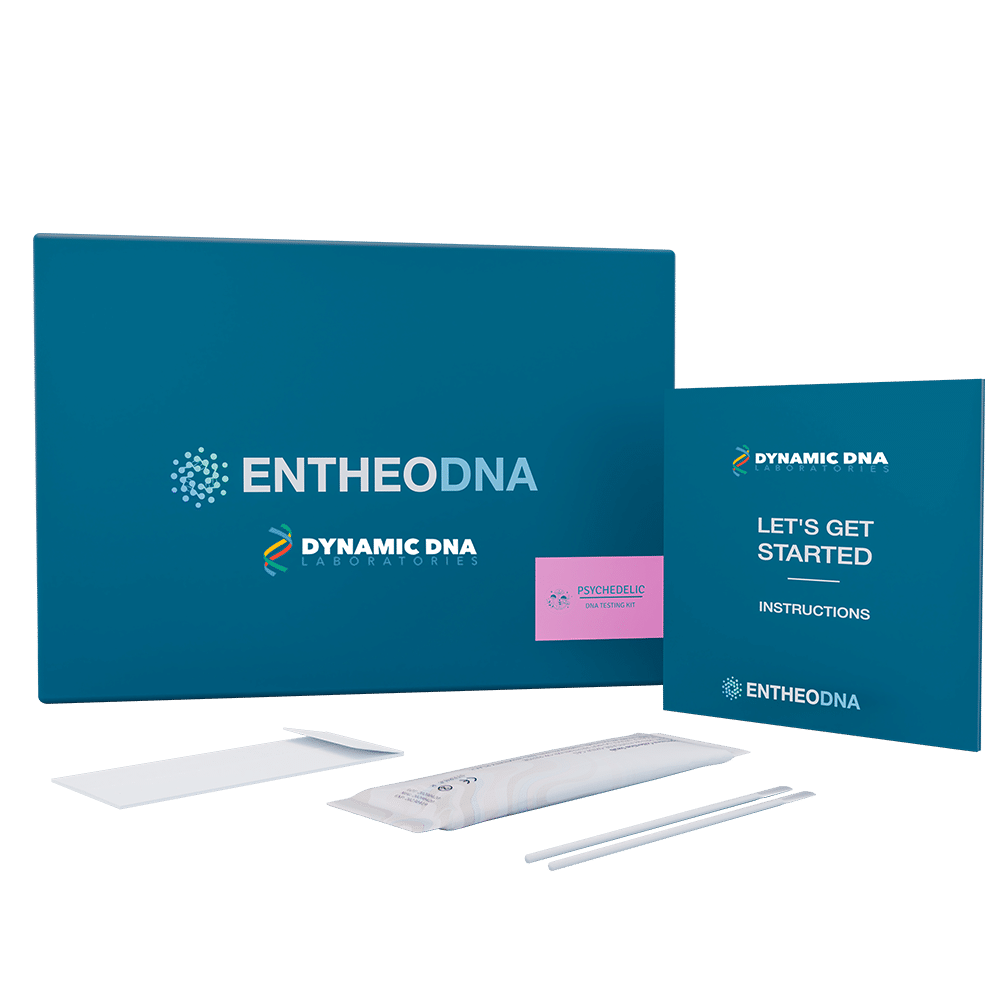
Hooman described taking a saliva-based test intended to assess genetic factors associated with sensitivity to multiple psychoactive substances. He said his results suggested that he was less sensitive to psilocybin than he had previously assumed.
That prompted him to reconsider the circumstances surrounding his earlier difficult experience, including his psychological state, environment, preparation, and lack of integration support.
The important insight is that an individual's response to a substance cannot necessarily be predicted by dose alone.
Personal history, current mental state, environment, expectations, other substances, and individual biological differences may all matter.
Hooman's experience illustrates how biological information might contribute to a broader assessment, but it does not establish that genetic testing can independently determine appropriate dosing or eliminate psychological risks.
For entrepreneurs working in personalized wellness, the lesson is to distinguish between a promising tool, a validated clinical assessment, and a definitive prediction.
9. Screening and human referrals can help identify people who need additional support
Building on his interest in preparation, Hooman described a preliminary screening system intended to identify people who may require more specialized assistance before a psychedelic experience.
A screening process could help direct people toward additional assessment rather than treating all prospective clients as interchangeable.
Hooman also discussed combining screening with educational resources, laboratory testing, and access to trained human coaches.
Such a system would need to be evaluated carefully. A screening score is not a diagnosis, and its usefulness depends on the quality of the questions, the evidence supporting its design, and how results are interpreted.
Still, the model raises an important operational question for psychedelic businesses: What happens when an inquiry reveals that a prospective customer needs more support than the business can provide?
Having a clear referral pathway is one way to address that responsibility.
10. Verifiable information infrastructure could help professionalize the industry

Toward the end of the interview, Hooman described several projects intended to make psychedelic information and laboratory services easier to access.
These included AI research tools, a psychedelic preparation and integration platform, preliminary screening resources, and an online system for ordering laboratory tests.
He described one research tool as containing more than 50,000 documents spanning scientific literature, law, patents, and traditional knowledge. The goal is to let users ask questions and inspect the documents used to generate answers.
He also discussed an online laboratory-testing workflow designed to make it easier to compare available services, submit samples, and obtain certificates of analysis that can be independently verified.
These projects address different parts of the same problem: information is difficult to use when it is fragmented, inaccessible, expensive, or impossible to verify.
For the wider mushroom industry, this is a relevant model. Entrepreneurs often need to navigate scattered scientific literature, inconsistent supplier documentation, evolving regulations, and unfamiliar testing requirements.
Still, the quality of the underlying information matters more than the size of a database. Scientific claims need appropriate evidence, legal information needs jurisdictional context, and traditional knowledge should be represented respectfully and accurately.
The bigger picture: Building an industry around responsibility
Laboratory testing, transparent labeling, preparation, screening, integration, and accessible research tools are all potential pieces of a more accountable mushroom and psychedelic industry. AI may help make some of these resources more affordable and easier to navigate, but it also introduces new challenges involving reliability, privacy, and appropriate human oversight.
The companies and organizations operating in this space must grapple with what they can substantiate about their products, how they communicate uncertainty, and what support they can realistically provide when consumers need help.
As Hooman's experience illustrates, those questions are not abstract. They can emerge from a single unexpectedly difficult experience and shape the direction of an entire organization's work.
The future of the mushroom and psychedelic industries will involve more than new formulations, bigger production runs, and increasingly sophisticated technology. It will also depend on the less glamorous infrastructure of testing, education, accountability, and care.
This article is based on the Mycopreneur Podcast interview with Rev Hooman. Personal experiences and descriptions of his projects are attributed to the interviewee and should not be interpreted as established clinical evidence or medical advice.