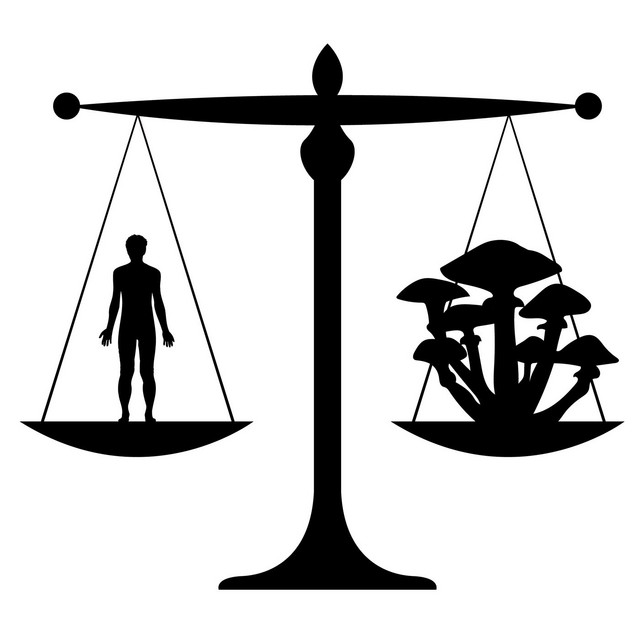
For much of the modern “Psychedelic Renaissance”, the journey has been intensely personal.
Heal yourself. Become a better version of yourself.
But what happens when the psychedelic experience stops being about me?
What happens when you have children? When you become responsible for other people? When the plants and fungi at the center of the psychedelic movement are understood not simply as molecules or therapeutic tools, but as part of living cultures with their own histories, cosmologies and communities?
Those questions are at the center of a growing conversation around what it means to build a more relational psychedelic culture.
Glauber Loures de Assis, a Brazilian scholar and founder of the Psychedelic Parenthood Community, believes the movement has spent too much time looking inward.

G;auber Loures de Assis
“There’s no me without the others, without community, without biomes, bioculture, without society,” he told the Mycopreneur Podcast in an episode released on September 4th.
For Loures de Assis, this epiphany sits at the intersection of two projects he is currently working on: building a community for psychedelic parents and caregivers, and helping bring together Indigenous leaders, academics, activists and psychedelic practitioners at the upcoming World Ayahuasca Forum in Girona, Spain.
The psychedelic parenthood problem
Loures de Assis began developing the Psychedelic Parenthood Community after noticing something missing from psychedelic conferences and communities.
“There was always, always something missing there,” he said. “If we are part of the family, we always need a network of support to have someone attending something.”
He began talking with mothers involved in the psychedelic field who described how difficult it could be to participate in psychedelic culture while raising children. Becoming a father himself transformed the issue from an observation into a personal reality.
“Being a father is by far one of the most psychedelic experiences ever,” he said. “I’m expanding my mind, I’m learning every day.”
But parenthood also introduces something that can be conspicuously absent from psychedelic culture: responsibility for somebody other than yourself.
The Psychedelic Parenthood community was created to bring together “parents, caregivers, mothers” to discuss the experience of caring for vulnerable people while navigating the stigma and political complications surrounding psychedelic use.
That stigma can be significant for many in the growing psychedelic field.
At last year's Breaking Convention in England, the Psychedelic Parenthood community organized a childcare space. Loures de Assis recalled mothers arriving and telling them, essentially, that they had only just realized there was a community for people like them.
“I’ve just realized that I’m a psychedelic mom,” someone told him.
The fact that people could be involved in psychedelics for years without having a community in which to openly discuss parenthood, he argues, is itself revealing. The psychedelic movement has developed conferences, retreats, clinical programs, investment networks and professional organizations. But it has often struggled to accommodate one of the most fundamental social structures humans have: the family.
For Loures de Assis, psychedelic parenthood isn't primarily about children taking psychedelics. In fact, he argues that framing the conversation that way misses the point entirely.
“Bringing this topic to conversation has nothing to do with giving drugs to children,” he said. “It’s pretty much the contrary.”

From psychedelics to relationships
Loures de Assis points to Indigenous Amazonian cultures as examples of a fundamentally different way of conceptualizing psychedelic plants.
The model, he says, isn't simply about administering a substance.
“It’s the whole process of education, sitting together, interpreting the traditional transmission of knowledge,” he said. “It’s a form of an existential way to be on this planet. A good psychedelic parent would start not with psychedelics, but with stories, storytelling.”
The idea challenges the assumption that psychedelic education begins with pharmacology. It begins with teaching children how to relate to other people, other species and the world around them. And that same relational framework is what he believes is missing from much of the contemporary psychedelic industry.
He argues that the movement has increasingly separated molecules from the cultural, ceremonial and ecological contexts in which they developed.
“Psychedelics are pluripotent,” he said. “They can expand us and they can do things in different directions. More than the setting is the kind of people who are leading, the kind of people who are seeding, the kind of people that are trained,” he said.
In other words, the psychedelic experience isn't just about what someone takes.
It's about who is there, what relationships surround it, what knowledge informs it and what happens afterward.
The World Ayahuasca Forum as “Cosmic Diplomacy”
That same philosophy is behind the World Ayahuasca Forum September 9-13, which will bring more than 120 Indigenous leaders from different nations together with academics, activists and other participants in Girona, Spain.
Loures de Assis describes the gathering as a “cosmic embassy.”
It is also, he argues, an experiment in whether radically different knowledge systems can coexist without one simply absorbing the other.
His preferred metaphor is the Amazon River.
“The Amazon River is not born alone,” he said. “It’s the confluence of two different rivers.”
The rivers retain different identities, colors and ecosystems before becoming something larger together. The idea of confluence is particularly significant given the history of psychedelic conferences.
Loures de Assis points to an earlier World Ayahuasca Conference in Brazil where, he says, some Indigenous leaders ended up spending their time in tents while conference interpreters stayed in hotels and had more opportunity to speak.
In response, Indigenous leaders developed their own gathering.
The Indigenous Ayahuasca Conference eventually grew into a gathering involving nearly 40 Indigenous nations.
Then, according to Loures de Assis, organizers began talking across those differences.
“Let’s just practice cosmic diplomacy,” he said. “We don’t need to have the same monoculture of thought or this single narrative.”
Instead, difference itself can become a source of power.
“Dialogue is when the difference can be in the same room.”
That may be one of the most important ideas emerging from the current psychedelic moment.
The goal isn't necessarily achieving consensus, but coexistence.
Beyond the psychedelic monoculture
Loures de Assis is sharply critical of what he sees as the increasing standardization of the psychedelic movement.
He worries that the industry risks reproducing the same problems found in conventional healthcare and pharmaceutical development—only with different molecules.
He describes the current moment as potentially “dystopian,” arguing that parts of the movement are simply reproducing existing systems with “better drugs and promises of miraculous healing.”
At the same time, he sees Indigenous knowledge as offering an opportunity to imagine something different.
“Psychedelics, they can heal, but they can also harm,” he said. “They can also damage people.”
That is precisely why, he argues, culture and lineage should be brought into conversation with science rather than positioned against it.
“Culture is not really enough,” he said. “I would say cosmologies, tradition, lineage, also data.”
For Loures de Assis, the question isn't whether Western neuroscience should replace Indigenous knowledge, or whether Indigenous knowledge should replace Western science.
It is whether they can actually learn from one another.
The problem with extracting the molecule
That question becomes particularly important as pharmaceutical companies attempt to isolate psychedelic compounds from the plants and fungi from which they originated.
Loures de Assis worries about what happens when a substance such as ayahuasca is reduced to an individual molecule and transformed into a patentable pharmaceutical product.
His concern isn't necessarily that molecules should never be isolated. It's about what happens to the relationships surrounding them.
“If you are just extracting DMT from ayahuasca to offer in psychedelic-assisted therapy, we are not aware that this might affect the populations in the Amazon rainforest itself,” he said.
He argues that researchers and companies need to ask who provided the knowledge, who benefits from its commercialization and whether Indigenous communities are being treated as co-creators or merely sources of information.
That is where he sees concepts such as benefit sharing and the Nagoya Protocol becoming increasingly important.
“More important than the ‘what’... I can only tell when I also know the how,” he said.
“How are people doing it?”
Who is involved?
Who gets to participate?
Who gets paid?
Who gets credited?
Who gets protected?
Who gets excluded?
And who gets to define what the psychedelic future actually looks like?
A different kind of psychedelic revolution
Loures de Assis is skeptical of some of the grandiose rhetoric surrounding the psychedelic renaissance. He points to a psychedelic culture increasingly obsessed with optimization, wealth and personal performance and asks whether that really constitutes a revolution.
“I’m not seeing a lot of revolution when I see those guys talking about taking psychedelics and having these crazy ideas about becoming super rich and billionaires and having this shape of Arnold Schwarzenegger because they’re taking mushrooms now,” he said.
A genuine paradigm shift, he argues, would have to look different. It would have to support families, take Indigenous cosmologies seriously, confront extraction,and make room for disagreement.
And it would have to expand the psychedelic conversation beyond the individual.
“A real paradigm shift that can support kids, people who are really suffering demands also a different model,” he said.
That model, he believes, must place Indigenous cosmologies and benefit sharing at its center.
And it may also require something much simpler: learning how to stay in relationship with people who don't see the world exactly as we do. The prescription that Loures de Assis is working towards with international collaborators is one that centers ‘Cosmic Diplomacy’, which he outlines as the conclusive focal point of our dialogue on the Mycopreneur podcast.
“We should not buy this trap that you need to just criticize and you need to just be against everything.Making enemies is very easy. Actually making allies is much more difficult, but it makes much more of a difference in impact. Dialogue is different from consensus,” he said.
“Dialogue is when the difference can be in the same room.”